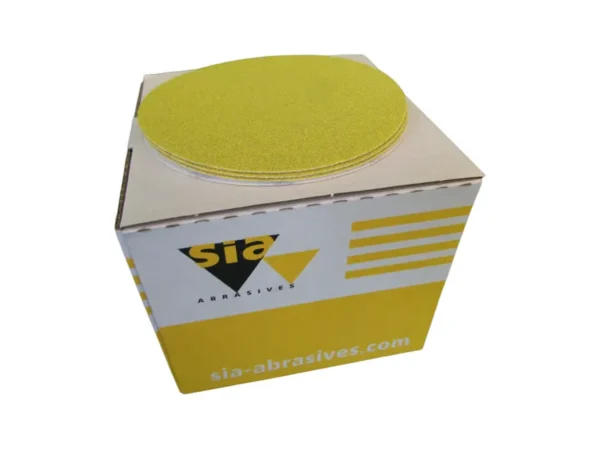
Choosing the correct sanding disc grit for window profiles is essential for achieving smooth finishes, maintaining profile integrity, and improving overall fabrication quality. Whether working with uPVC, aluminium, composite, or painted window profiles, selecting the appropriate grit can make the difference between a professional finish and costly rework.
Many fabrication workshops focus heavily on cutting, welding, and assembly while overlooking the importance of proper sanding practices. However, using the wrong grit can lead to scratches, uneven surfaces, excessive material removal, and increased finishing time.
This sanding disc grit guide for window profiles explains how grit sizes work, when to use each grit range, and how to achieve the best results during fabrication and finishing processes.
What Does Sanding Disc Grit Mean?
Grit refers to the size of the abrasive particles attached to the sanding disc.
The lower the grit number, the larger and more aggressive the abrasive particles become.
The higher the grit number, the finer and smoother the finish produced.
For example:
- 40 grit = very coarse
- 80 grit = coarse
- 120 grit = medium
- 180 grit = fine
- 240 grit = very fine
- 320 grit and above = finishing and polishing
Understanding these differences is critical when working with window profiles.
Why Grit Selection Matters for Window Profiles
Window profiles require precision finishing to ensure proper appearance and performance.
Using the correct grit helps:
- Remove imperfections efficiently
- Prepare surfaces for coating
- Smooth welded areas
- Eliminate scratches
- Improve paint adhesion
- Reduce finishing time
Incorrect grit selection can damage profiles and create unnecessary additional work.
Common Materials Used in Window Profiles
Different profile materials respond differently to sanding.
uPVC Window Profiles
uPVC is relatively soft compared to metal.
When sanding uPVC profiles:
- Excessive pressure can damage surfaces
- Aggressive grits may leave deep scratches
- Heat buildup should be minimized
Careful grit selection is essential for maintaining a clean appearance.
Aluminium Window Profiles
Aluminium profiles are harder and can withstand more aggressive abrasives.
Proper sanding helps:
- Remove oxidation
- Smooth cut edges
- Prepare surfaces for coating
- Improve cosmetic appearance
Composite Profiles
Composite materials often require a balanced approach because they combine different material properties within a single profile.
Coarse Grit Sanding Discs (40–80 Grit)
Coarse sanding discs are designed for heavy material removal.
Applications include:
- Removing large imperfections
- Eliminating deep scratches
- Smoothing welded joints
- Correcting fabrication defects
40 Grit
40-grit discs are highly aggressive and should only be used when significant material removal is necessary.
Typical uses:
- Major surface corrections
- Heavy weld cleanup
- Removing damaged material
Because of their aggressiveness, they are rarely used for final profile finishing.
60 Grit
60-grit discs offer a balance between removal speed and surface control.
Suitable for:
- Initial weld cleanup
- Edge preparation
- Surface leveling
80 Grit
80 grit is commonly used as the starting point for many profile finishing operations.
Benefits include:
- Effective material removal
- Reduced scratch depth
- Easier transition to finer grits
Medium Grit Sanding Discs (100–150 Grit)
Medium grits are often used after initial surface preparation.
100 Grit
100-grit discs help refine surfaces after coarse sanding.
Common applications:
- Removing sanding marks
- Surface blending
- Intermediate finishing
120 Grit
120 grit is one of the most versatile sanding options for window profile fabrication.
It provides:
- Good surface quality
- Controlled material removal
- Efficient finishing performance
Many workshops rely heavily on 120-grit discs during routine finishing work.
150 Grit
150 grit is ideal when preparing profiles for final finishing stages.
It significantly reduces visible sanding marks while maintaining productivity.
Fine Grit Sanding Discs (180–240 Grit)
Fine abrasives focus on improving surface appearance rather than removing material.
180 Grit
180-grit discs are commonly used for:
- Final profile preparation
- Surface refinement
- Finishing operations
This grit often produces a smooth, professional-looking finish.
220 Grit
220 grit helps eliminate minor imperfections left by earlier sanding stages.
Benefits include:
- Improved surface uniformity
- Better coating preparation
- Reduced visible scratches
240 Grit
240 grit is frequently used before painting, coating, or polishing operations.
It creates a highly refined surface suitable for premium finishes.
Extra Fine Grits (320 Grit and Above)
For high-end finishing applications, extra-fine abrasives are often required.
These grits are commonly used for:
- Paint preparation
- Polishing
- Decorative finishes
- Premium architectural products
Higher grits may include:
- 320 grit
- 400 grit
- 600 grit
- 800 grit
These abrasives remove very little material but dramatically improve surface quality.
Recommended Grit Sequence for Window Profiles
Rather than jumping directly from coarse to fine sanding, gradual progression delivers better results.
A common sequence might be:
- 80 grit
- 120 grit
- 180 grit
- 240 grit
For premium finishes:
- 80 grit
- 120 grit
- 180 grit
- 240 grit
- 320 grit
- 400 grit
This approach minimizes visible sanding marks and improves finish consistency.
Common Sanding Mistakes to Avoid
Many fabrication workshops encounter finishing problems due to incorrect sanding techniques.
Skipping Grit Levels
Moving directly from a coarse grit to a very fine grit often leaves visible scratches behind.
Applying Excessive Pressure
Too much pressure can:
- Damage profiles
- Create uneven surfaces
- Increase heat buildup
- Shorten disc lifespan
Using Worn Discs
Old sanding discs become less efficient and may produce inconsistent results.
Choosing the Wrong Grit
Using an overly aggressive grit for finishing work can create additional rework and increase labor costs.
How to Select the Right Sanding Disc for Your Application
When choosing a sanding disc grit for window profiles, consider:
- Profile material
- Surface condition
- Desired finish quality
- Production speed requirements
- Coating requirements
- Customer expectations
Matching grit selection to the specific task ensures the best balance between productivity and finish quality.
Frequently Asked Questions
What grit is best for sanding uPVC window profiles?
120 to 180 grit is commonly used for general finishing, while finer grits may be used for premium surface preparation.
What grit should be used before painting window profiles?
Most fabricators use 180 to 240 grit before painting to achieve a smooth and uniform surface.
Is 80 grit too coarse for window profiles?
80 grit can be effective for initial surface preparation but is generally too aggressive for final finishing.
What is the most versatile sanding disc grit?
120 grit is often considered one of the most versatile options for window profile fabrication.
Should aluminium profiles be sanded differently than uPVC?
Yes. Aluminium can usually tolerate more aggressive abrasives, while uPVC requires greater care to avoid surface damage.
How do I remove deep scratches from a profile?
Start with a coarser grit such as 80 or 100, then gradually move through finer grits to restore surface quality.
Why are sanding marks still visible after finishing?
This often occurs when grit levels are skipped or insufficient sanding is performed between stages.
How often should sanding discs be replaced?
Replace sanding discs when cutting performance declines, clogging occurs, or consistent finishes can no longer be achieved.