Flow control valves are widely used in pneumatic and hydraulic systems to regulate the speed and direction of fluid flow. Choosing the correct type can significantly improve performance, reduce energy waste, and extend equipment lifespan.
How Do Valves Work
Before exploring the different flow valve types, it’s important to understand how valves function.
Valves control the movement of fluids (liquids or gases) by opening, closing, or partially obstructing pathways. A flow control valve specifically regulates the rate of flow, rather than simply stopping or allowing it.
Key working principles include:
- Restricting flow through an adjustable opening
- Maintaining consistent flow despite pressure changes
- Allowing directional control in some designs
In hydraulic systems, valves play a crucial role in controlling actuator speed, ensuring smooth and controlled operations.
Types of Valves in Piping
There are several types of valves in piping systems, each designed for a specific function. While flow control valves focus on regulating flow rate, other valve types serve different purposes.
Common valve types include:
- Gate valves – used for on/off control
- Ball valves – provide quick shut-off
- Globe valves – suitable for flow regulation
- Check valves – prevent backflow
- Butterfly valves – lightweight and efficient for large pipes
Among these, flow control valves are essential when precise adjustment of fluid movement is required rather than simple isolation.
Main Flow Control Valve Types
When it comes to flow control valve types, there are several variations depending on design and application.
1. Needle Valves
Needle valves offer precise control over flow rate through a small, tapered needle-like plunger. They are ideal for applications requiring fine adjustments.
2. Pressure-Compensated Flow Control Valves
These valves maintain a constant flow rate even when system pressure fluctuates. They are widely used in hydraulic systems where stability is critical.
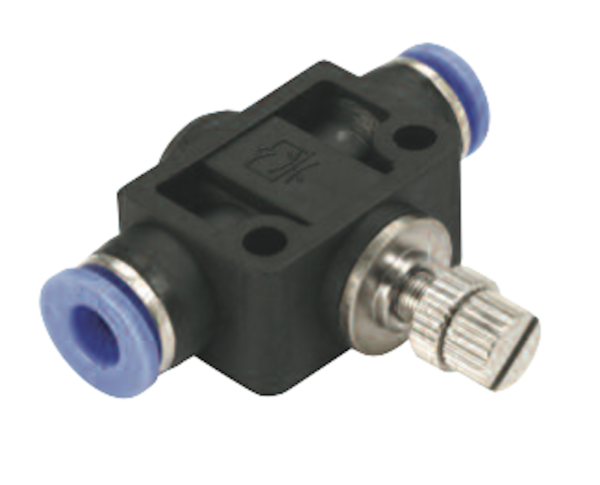
3. Inline Flow Control Valves
Inline valves are installed directly within the pipeline and are commonly used for compact systems.
This type of valve is designed for easy integration, reliable performance, and efficient flow regulation in both pneumatic and hydraulic setups.
4. Adjustable Flow Control Valves
These allow manual adjustment of flow rate, giving operators flexibility based on system requirements.
5. One-Way Flow Control Valves
These valves restrict flow in one direction while allowing free flow in the opposite direction. They are commonly used in pneumatic circuits.
Hydraulic Flow Control Valve Types
In hydraulic systems, precision is critical. Different hydraulic flow control valve types are used to manage fluid power efficiently.
Key types include:
- Throttle valves – simple restriction-based control
- Flow regulators – maintain constant output regardless of pressure
- Priority valves – ensure flow is directed to essential components first
These valves help control actuator speed, reduce system shock, and improve overall efficiency.
Why Inline Flow Control Valves Matter
Inline valves are particularly valuable due to their compact design and ease of installation. They are widely used in industrial environments where space and efficiency are important.
Benefits include:
- Simple installation within existing piping
- Reliable and consistent flow control
- Reduced system complexity
The inline flow control valve available on the product page is designed for durability and precise adjustment, making it suitable for a wide range of applications.
Choosing the Right Flow Valve Type
Selecting the right flow valve type depends on several factors:
- Type of fluid (air, oil, or water)
- Required level of control
- System pressure and temperature
- Installation space and configuration
For example:
- Use needle valves for precision control
- Use pressure-compensated valves for stable الأداء
- Use inline valves for compact systems
Making the right choice improves efficiency and reduces maintenance costs.
Applications of Flow Control Valves
Flow control valves are used across various industries, including:
- Manufacturing and automation
- Hydraulic machinery
- Pneumatic systems
- Water and fluid management systems
Their ability to regulate flow makes them essential for maintaining consistent performance in complex systems.
FAQ about Types of Flow Control Valves
Q1: What are the most common flow control valve types?
The most common types include needle valves, inline valves, pressure-compensated valves, and one-way flow control valves.
Q2: How do hydraulic flow control valve types differ from others?
They are specifically designed to handle high-pressure fluid systems and maintain consistent flow under varying conditions.
Q3: What is the purpose of an inline flow control valve?
It regulates flow directly within the pipeline, offering compact design and easy installation.
Q4: How do valves work in general?
Valves control fluid flow by opening, closing, or partially blocking pathways to regulate movement and pressure.
Q5: Which flow valve type is best for industrial use?
It depends on the application, but pressure-compensated and inline valves are commonly used for industrial systems.